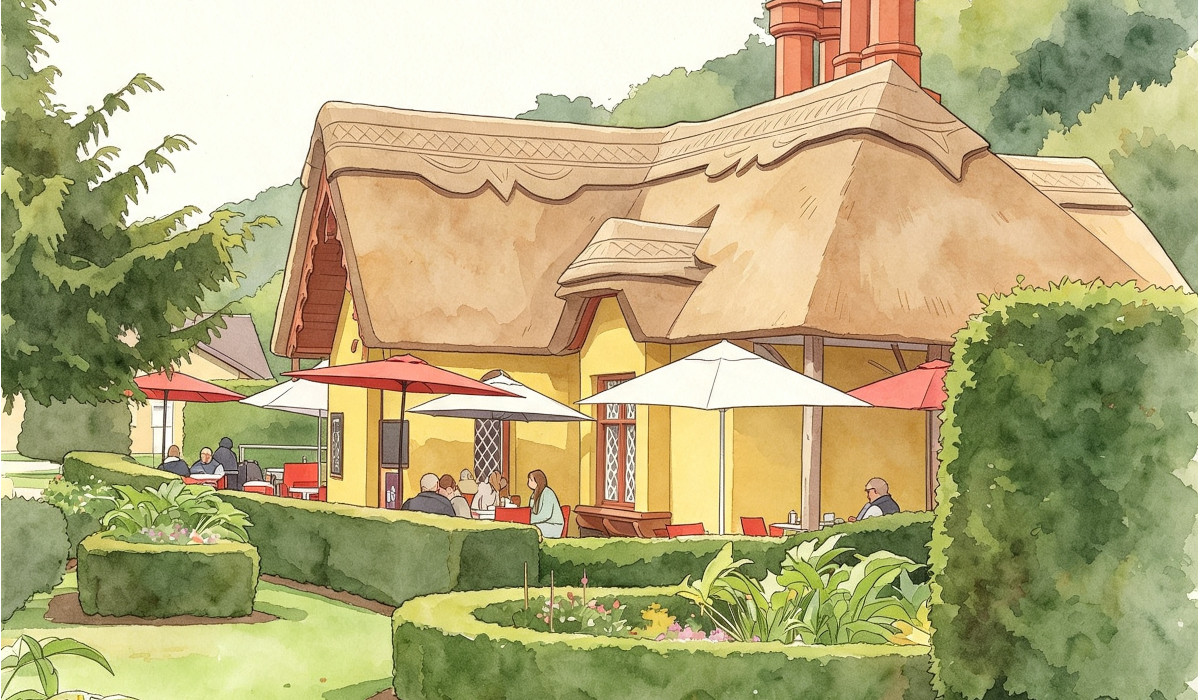
Deenagh Lodge
A thatched fantasy of a gate lodge at the park's New Street entrance, built in 1834 and dressed up to be seen, not hidden.
History & details
Built in 1834 for the 2nd Earl of Kenmare, this cottage orné was designed as a picturesque flourish for the demesne's grand entrance — copied, with modifications, from a published English pattern-book design. Its steep thatched roof, carved bargeboards, and loggias of rough tree-trunk pillars are all deliberate theatre: rustic on purpose, built to charm rather than shelter a gatekeeper plainly. Today it's a seasonal tearoom (April–September) run by Down Syndrome Kerry, staffed by around 30 adults with Down syndrome. For nearly 90 years, until re-thatching displaced him in 2025, the lodge was also where Killarney's children came to see Santa every Christmas.
The lodge's design has never been definitively attributed — its architect isn't known to have set foot in Ireland. Instead, it was adapted from a plate in Thomas Frederick Hunt's 1825 pattern-book of picturesque gate lodges and gamekeepers' cottages, with a larger rear return added to the original two-room plan. The result is one of the finest surviving cottage ornées in Ireland — a style built to look artlessly rustic while being carefully calculated down to the last carved bargeboard.
Its setting has quietly shifted over time: when the lodge was built, St Mary's Cathedral didn't yet exist. The cathedral's spire, completed in 1912, now dominates the view back across the road — the two buildings have faced each other ever since. The cathedral connection runs deeper than sightlines, too: the Earl who built the lodge is commemorated inside the cathedral, and the River Deenagh beside the lodge was diverted in the 1840s to make way for the cathedral's construction.
Until mid-2026 the building had stood white for as long as anyone photographed it. It was then repainted a bold golden yellow with terracotta-red trim — possibly a return to its original Regency-era colour scheme, though that's not yet confirmed by paint analysis or archival research.